
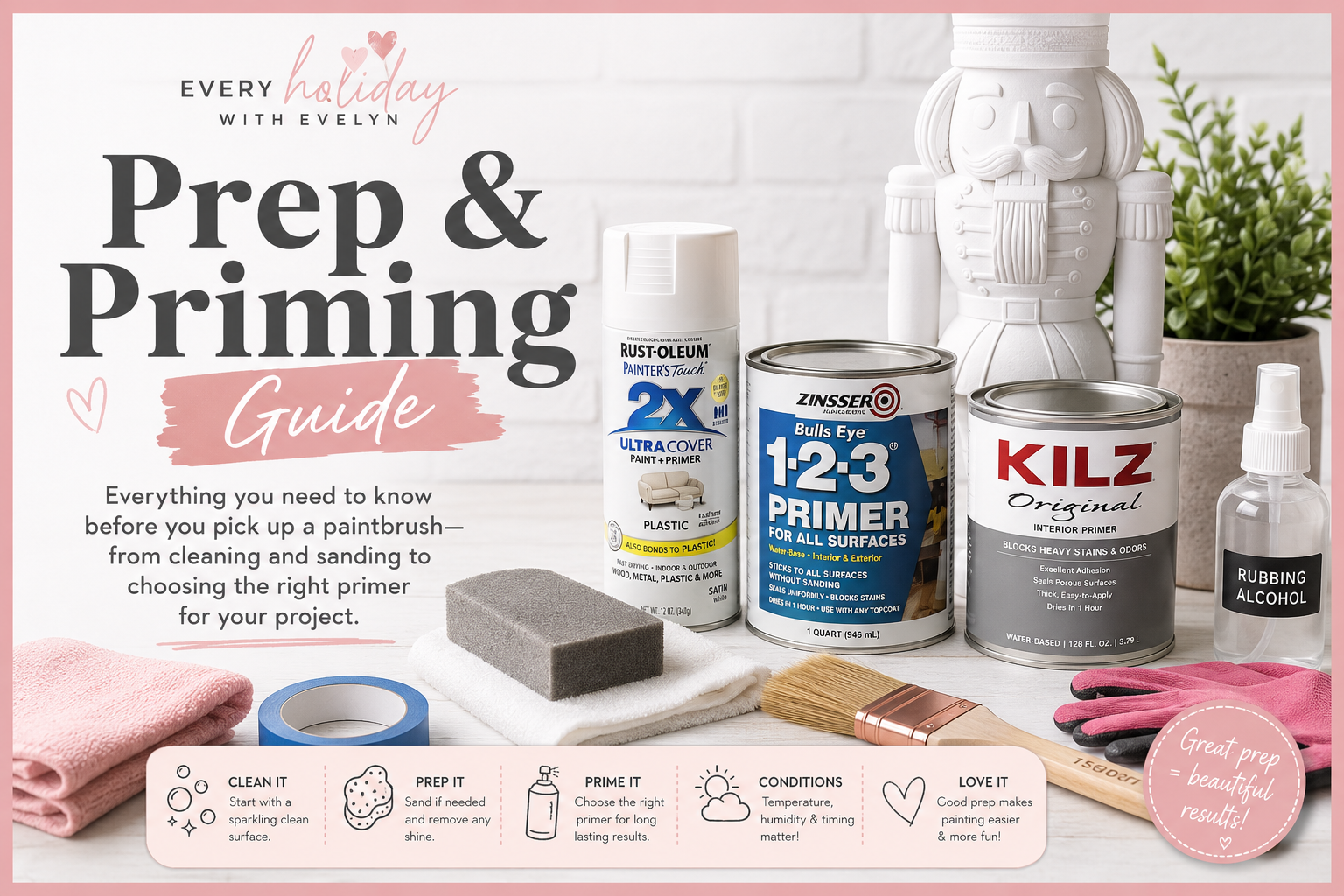
Every Holiday with Evelyn Guide
Prep & Priming
The quick answer first, then everything else you need if you want to read more.
The Short Answer
Do You Have to Prime?
Technically, no. But I absolutely recommend it.
Why prime?
A light coat of plastic bonding primer gives slick plastic some grip so acrylic and craft paint go on more evenly and hold up better.
If you skip it
Paint can bead up, look streaky, or peel more easily. Metallics may look duller, and outdoor pieces may chip or fade faster.
How much do I need?
Plan on about 1.5 to 2 cans of spray primer for a full-size nutcracker project.
#WalmartPartner | Affiliate links
White or Gray Primer?
This is the easiest way to choose.
White Primer
- Best for light or bright colors
- White, cream, pink, yellow, and pastels
- Helps lighter colors stay brighter
Gray Primer
- Best for rich or dark colors
- Burgundy, forest green, navy, and black
- Also helpful on white blow molds because you can see where you have sprayed
Need a Brush-On Option?
These are helpful if it is too cold to spray, you do not have a good spray area, or you are sensitive to spray paint fumes.
Zinsser Bulls Eye 1-2-3
Very low smell and good adhesion.
Shop ZinsserKilz 2
Low odor and dries quickly.
Shop Kilz 2Minwax Sealer
A brush-on option when spray sealer is not practical.
Shop Minwax SealerClean It First
I wash every blow mold before painting, even when it is brand new.
Wash It
Use warm water, a small amount of grease-cutting dish soap, and a soft cloth or sponge.
Clean the Details
Use a soft toothbrush around seams, grooves, and molded areas.
Rinse and Dry
Remove all soap and let the blow mold dry completely before priming.
Do You Need to Sand?
Usually, no.
If the plastic is very slick or glossy, lightly scuff it with a fine sanding sponge or fine-grit sandpaper. You only want to dull the shine enough to give the primer more grip.
If the blow mold is clean and your primer is made to bond to plastic, I usually skip sanding.
How I Apply Spray Primer
Light coats are the key.
Check the Can
Use the primer within the temperature, humidity, and recoat range listed on the label.
Apply Light Coats
Use smooth, even passes. Avoid heavy buildup around faces, grooves, and molded details.
Let It Dry
Follow the recoat time on the can and add another light coat only if needed.
Let It Cure
Give the primer time to harden before painting, taping, or handling the blow mold.
Prep & Priming FAQs
Do I have to prime a plastic blow mold?
No, but I recommend it. Primer gives slick plastic more grip and helps paint apply more evenly and hold up better.
How many cans of primer do I need?
Plan on about 1.5 to 2 cans for a full-size nutcracker project.
Do I need to sand first?
Usually, no. Lightly scuff only if the surface is very slick or glossy.
Should I use white or gray primer?
Use white under light and bright colors. Use gray under rich and dark colors. Gray also makes it easier to see coverage on a white blow mold.
Can I use brush-on primer instead?
Yes. Brush-on primer is a good option when spraying is not practical because of weather, space, or sensitivity to fumes.
Why is my primer still sticky?
Heavy coats, cold temperatures, humidity, or short drying times can all cause tackiness. Do not paint over primer while it is still sticky.
Ready to Paint?
Once your primer is cured, you are ready for color.
Some links on this page are affiliate links, which means I may earn a commission from qualifying purchases at no additional cost to you.