Mix the Perfect Paint Color | Every Holiday with Evelyn
Every Holiday with Evelyn Guide

Mix the Perfect Paint Color

Can’t find the exact color you have in mind? Whether you are matching ribbon, ornaments, fabric or another decoration, you can mix a custom shade without needing an art degree or seventeen nearly identical bottles of green.

Custom paint color mixing guide with craft paint bottles, brushes, paint swatches and a painted nutcracker.
Before you start

Build the color slowly.

Start with the lightest or largest part of the mixture. Add darker or stronger colors a tiny amount at a time. It is much easier to deepen a color than to rescue a batch that became too dark in one enthusiastic squeeze.

Use clean tools

Use a clean palette, cup and brush. Even a small amount of leftover paint can shift a custom color.

Test it dry

Paint a sample and let it dry before deciding. Acrylic paint can look slightly darker, flatter or less bright after drying.

Match in the right light

Compare your sample beside the ribbon, fabric or decoration you are matching under the lighting where the finished project will be seen.

Write it down

Record the brands, paint names and approximate amounts as you mix. “Mostly red plus a little brown” is better than relying on memory later.

Evelyn’s Tip Mix a tiny test batch first. Once you love the color, recreate it in a larger container instead of adjusting an entire project-size batch from the beginning.
For jackets, hats and large sections

How to mix enough paint for the whole area

Custom colors can be difficult to recreate perfectly. If you are painting a large section—or two matching pieces—mix the full amount before you begin.

1

Perfect a small sample first

Make a tiny batch and test it dry. Adjust that sample until the color is right before scaling it up.

2

Choose one larger container

Mix the full batch in one clean cup or airtight container. Multiple small batches are much more likely to dry as slightly different colors.

3

Make extra

Mix more than the estimated amount so you have enough for additional coats and future touch-ups.

4

Scale the recipe consistently

Use the same spoon, dropper or measured squeeze as you enlarge the batch. Write each addition down while you work.

5

Stir thoroughly and often

Scrape the sides and bottom of the container. Stir again occasionally while painting so the color and finish stay consistent.

6

Label and save leftovers

Store usable leftover paint in a tightly sealed container labeled with the project, paint names and recipe. Follow the paint manufacturer’s storage instructions.

Avoid estimating a project-size batch entirely by eye. Tiny differences are easier to spot across a large jacket, hat, sign or pair of matching figures.
Starting points

Popular custom color recipes

These are flexible starting points rather than exact formulas. Pigment strength varies by brand and color, so add the stronger shade gradually.

Paint color recipe chart showing how to mix burgundy, sage, cream, blush, navy and other popular custom colors.
Need a project-size batch? Mix and dry-test the recipe first, then scale it up in one container. Do not try to recreate the shade separately for each coat.
Color rescue

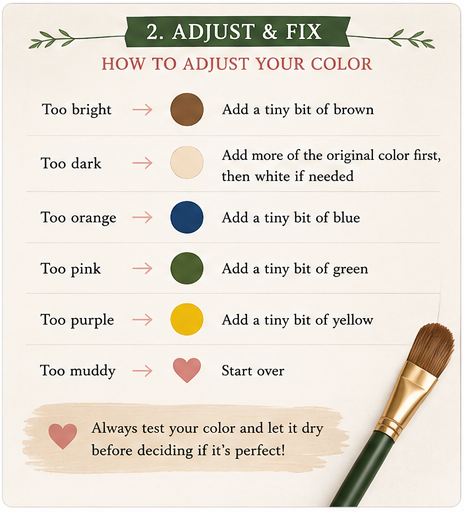
Adjust and fix a custom color

Add correcting colors in very small amounts. Mix completely and test again before making another adjustment.

Paint mixing adjustment chart showing how to correct colors that are too dark, bright, warm, cool, pink or orange.
Evelyn’s Tip If you have added four or five different colors and the mixture keeps getting muddier, stop. Starting a fresh small batch is usually easier than continuing to chase the original color.
Keep the batch predictable

Common mixing mistakes

Adding black too early

Black can quickly dull a color. Try a darker version of the original color, brown or navy first when appropriate.

Judging only the wet color

Always dry a sample. The wet mixture may not match the final color or sheen.

Mixing separate project batches

Even careful recipes can vary slightly. Mix enough for the full section or matching set at one time.

Forgetting the finish

Matte, satin, gloss, pearl and metallic paints can look different even when the color appears similar. Test the complete finish you plan to use.

Using dirty containers

Old paint residue can alter the shade. Start with clean mixing tools and use a fresh stirrer.

Adding too much at once

Strong colors should be added in tiny amounts. One large squeeze can change the mixture much more than expected.

Quick reference

Color mixing cheat sheet

Quick paint mixing cheat sheet for making colors softer, richer, warmer, cooler, darker, lighter or more vintage.
Always test the final mixture with the planned primer, base color and sealer. A clear finish can slightly change the depth, warmth or sheen of the color.
Saving custom colors

Store leftovers for touch-ups

  • Use a clean, airtight container.
  • Label it with the project name and date.
  • List the paint brands and color names.
  • Add your approximate mixing recipe.
  • Store it according to the manufacturer’s temperature directions.
  • Check the texture and odor before reusing stored paint.
  • Stir thoroughly before applying a touch-up.
Frequently asked questions

Color mixing FAQ

Can I mix different acrylic paint brands?

Often, yes, but pigment strength, sheen and formulation can vary. Test the mixture and the complete primer-paint-sealer combination first.

Why does my dry sample look different?

Acrylic paints may dry slightly darker, flatter or less bright. Lighting, surface color and finish can also affect how the color appears.

How much extra paint should I mix?

There is no universal amount because coverage varies. Mix enough for every planned coat plus a reasonable reserve for corrections and future touch-ups.

Can I mix more later using the same recipe?

You can get close, but tiny measuring differences may still show. For large or matching areas, one full batch is the safest option.

Can I mix metallic paint with regular acrylic?

Sometimes, but the regular paint may reduce the metallic shine. Test the mixture after it dries and check compatibility with the planned sealer.

What should I do if the color becomes muddy?

Stop adding colors. If a small correction does not improve it, start a fresh batch using fewer colors and smaller additions.

Can I store mixed paint in a disposable cup?

Only if the cup has a secure airtight lid and is suitable for the paint. Follow the paint label’s storage instructions and keep it away from extreme temperatures.

Should I add water to make mixing easier?

Do not add water unless the exact paint manufacturer permits thinning and provides instructions. Too much water can affect coverage, adhesion and durability.

Need help finding the right shade?

Bring your color question to the community.

Share your inspiration photo, ribbon or project color in one of the Every Holiday with Evelyn communities, or browse the FAQ library for more painting help.